


The Real Return on Investment of a Well-Planned Home Renovation
When homeowners think about return on investment (ROI), they often focus on one question: How much value will this renovation add to my home?
While resale value is certainly important, it is only part of the equation. A well-planned home renovation can deliver returns in many ways that are not always reflected in a property's market price. Improved comfort, better functionality, lower maintenance costs, enhanced energy efficiency, and a higher quality of life all contribute to the true value of a renovation project.
Whether you are considering a kitchen renovation, bathroom remodel, basement finishing project, or a whole-house renovation, understanding the full picture of ROI can help you make smarter decisions and maximize the benefits of your investment.
Why Most Homeowners Misunderstand Renovation ROI
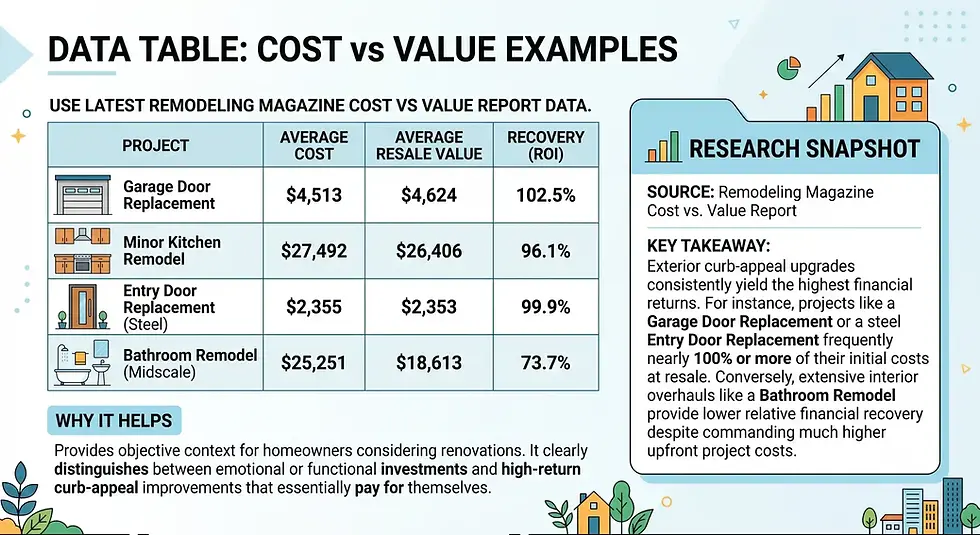
Traditionally, ROI has been measured by comparing the cost of a renovation to the increase in property value it creates. For example, if a homeowner spends $50,000 on a renovation and the home's value increases by $35,000, the project would have a 70% cost recovery rate.
Industry reports such as the annual Cost vs. Value Report from Remodeling Magazine frequently highlight projects that deliver strong financial returns. Exterior improvements, entry door replacements, and certain kitchen updates often rank among the highest-performing projects.
However, focusing only on resale value overlooks an important reality.
Most homeowners live in their homes for years after completing renovations. During that time, they experience the daily benefits of those improvements. A more functional kitchen, a better-designed bathroom, or additional living space can enhance everyday life long before a home is ever listed for sale.
This is why the most successful renovations are often measured by both financial returns and personal benefits.
Financial ROI: What Actually Adds Value to a Home?
Not all renovation projects affect property value equally.
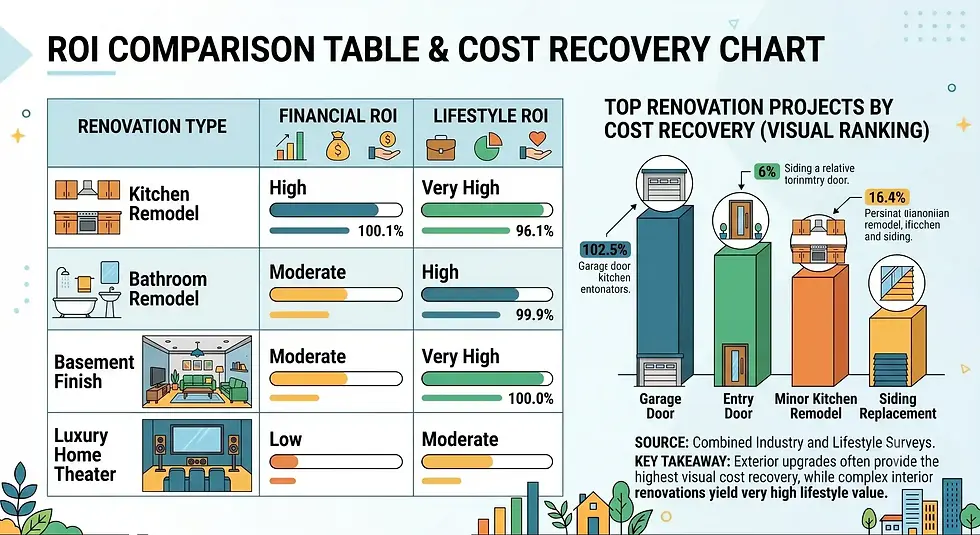
Historically, renovations that improve functionality, curb appeal, and broad buyer appeal tend to perform best. Updated kitchens, modernized bathrooms, new roofing, and energy-efficient improvements are examples of projects that frequently attract buyers and support property values.
According to data from Remodeling Magazine's Cost vs. Value Report, exterior replacement projects such as garage doors, entry doors, and manufactured stone veneer often produce some of the highest cost recovery percentages. Kitchen and bathroom improvements also remain consistently valuable because they influence spaces buyers use every day.
At the same time, more expensive projects do not always generate higher returns.
Luxury renovations can provide tremendous enjoyment for homeowners, but highly customized features may appeal to a smaller pool of future buyers. A state-of-the-art wine cellar or a highly personalized entertainment room may be valuable to the current owner while offering limited appeal to someone else.
The key is finding a balance between personal preferences and long-term marketability.
The Lifestyle ROI Most Homeowners Never Calculate

One of the most overlooked benefits of home renovation is lifestyle improvement.
Imagine preparing meals in a kitchen with more storage, better lighting, and improved workflow. Consider the convenience of a bathroom designed around your family's needs or a finished basement that provides valuable living space.
These benefits may not appear in a home appraisal, but they can significantly impact daily life.
Research from organizations such as Houzz consistently shows that homeowners often report higher satisfaction and improved enjoyment of their homes after completing renovation projects. Many homeowners cite increased comfort, improved organization, and better functionality as major reasons for renovating.
A renovation can save time, reduce frustration, and create a more enjoyable living environment. Over several years, those daily improvements can provide value that is difficult to measure financially but impossible to ignore.
How Home Renovations Influence Health and Well-Being

The design and condition of a home can have a meaningful impact on health and overall well-being.
According to the U.S. Environmental Protection Agency (EPA), Americans spend approximately 90% of their time indoors. As a result, the quality of indoor living environments plays a significant role in everyday comfort.
Many renovation projects directly contribute to healthier living conditions.
Replacing old flooring can reduce dust accumulation. Upgrading ventilation systems can improve air circulation. Addressing moisture problems can help prevent mold growth. New windows and insulation can improve temperature consistency throughout the home.
Beyond physical health, renovations can also influence mental well-being.
Studies in environmental psychology have shown that organized, functional spaces can help reduce stress and improve focus. A home that feels comfortable and well-designed often creates a greater sense of satisfaction and relaxation.
For many homeowners, these benefits become some of the most valuable returns on their investment.
Energy Efficiency ROI: Savings That Continue for Years

Energy-efficient renovations offer another form of long-term value.
Unlike some improvements that provide benefits primarily at the time of resale, energy upgrades can generate ongoing savings month after month.
Projects such as:
Installing new insulation
Replacing outdated windows
Upgrading HVAC systems
Improving roofing systems
Adding smart thermostats
can help reduce energy consumption and lower utility bills.
The U.S. Department of Energy and ENERGY STAR both emphasize the importance of energy-efficient home improvements in reducing household operating costs.
While savings vary based on climate, home size, and usage patterns, the cumulative impact can be significant over time. Lower utility bills combined with improved comfort create a powerful return that homeowners experience every day.
Additionally, energy-efficient homes are becoming increasingly attractive to buyers who are concerned about both sustainability and long-term operating expenses.
The Hidden ROI of Preventing Future Repair Costs

Many homeowners view renovation and maintenance as separate activities. In reality, they are often closely connected.
Certain renovation projects provide value by preventing larger and more expensive problems in the future.
For example:
Replacing an aging roof can prevent water damage.
Updating old plumbing can reduce the risk of leaks.
Modernizing electrical systems can improve safety.
Improving drainage can help protect foundations.
Small issues left unaddressed frequently become major repairs over time.
A minor leak may eventually lead to structural damage, mold growth, or extensive restoration work. By investing proactively, homeowners can avoid larger expenses and protect the value of their property.
This preventive aspect of renovation is often overlooked when calculating ROI, yet it can save thousands of dollars over the lifespan of a home.
Why Functional Improvements Often Deliver the Greatest Value

One of the most impactful renovation goals is improving how a home functions.
Modern homeowners increasingly prioritize flexibility, convenience, and efficient use of space.
Finished basements, home offices, expanded kitchens, and multifunctional living areas have become particularly desirable. The rise of remote work and changing family dynamics have shifted the way people use their homes.
A basement that once served as storage may become a guest suite, recreation area, or productive workspace. A redesigned kitchen may support both family meals and remote work activities.
These improvements help homeowners maximize the value of existing square footage without the expense and disruption of moving to a new property.
In many cases, functional improvements provide benefits that are both immediate and long-lasting.
The Marketability ROI Future Buyers Notice

While homeowners should not renovate solely for future buyers, marketability remains an important consideration.
Today's buyers often prioritize homes that are move-in ready and require minimal immediate repairs. Updated kitchens, modern bathrooms, energy-efficient features, and functional floor plans frequently attract greater interest in competitive housing markets.
An outdated property may still sell, but it often faces additional challenges.
Potential buyers may factor renovation costs into their offers or hesitate to move forward if they anticipate extensive updates.
Well-planned renovations can improve a home's overall appeal, helping it stand out when it eventually enters the market.
Even if a homeowner has no immediate plans to sell, maintaining market relevance can protect long-term property value.
Renovation Mistakes That Can Reduce ROI

Not every renovation project delivers positive returns.
One common mistake is over-improving the neighborhood. Investing significantly more than surrounding properties may limit the project's financial return.
Another mistake involves prioritizing short-term trends over long-term functionality. Design styles change quickly, while practical improvements often remain valuable for years.
Choosing contractors based solely on the lowest price can also create challenges. Poor workmanship may lead to repairs, delays, and additional expenses that reduce the overall value of the project.
Successful renovations begin with thoughtful planning, realistic expectations, and a focus on quality.
Evaluating a Renovation Before You Invest

Before committing to a renovation project, homeowners should consider several factors.
Ask yourself:
Will this improve daily life?
Will it increase functionality?
Will it reduce future maintenance costs?
Will it improve energy efficiency?
Will it support future resale value?
Projects that score well across multiple categories often provide the strongest overall returns.
Rather than viewing ROI as a single number, it is helpful to evaluate renovations through a broader lens that includes financial, practical, and lifestyle benefits.
This approach leads to more informed decisions and better long-term outcomes.
Conclusion
The real return on investment of a well-planned home renovation extends far beyond resale value. While increasing property value remains an important objective, the most successful renovations also improve comfort, functionality, energy efficiency, health, and overall quality of life.
A thoughtfully designed renovation can help homeowners enjoy their space more fully while reducing future maintenance concerns and supporting long-term marketability.
Whether the project involves a kitchen renovation, bathroom remodel, basement finishing, or a complete home transformation, the true value often lies in the everyday benefits homeowners experience long after construction is complete.
For homeowners considering their next renovation project, working with an experienced and trusted contractor is essential. Burrini and Sons Contracting understands the importance of balancing craftsmanship, functionality, and long-term value. Their commitment to quality renovations helps homeowners make investments that not only enhance property value but also improve the way they live in and enjoy their homes for years to come.


Comments