


The Psychology of Home Renovation: How Living Spaces Influence Daily Life
When homeowners think about renovation projects, the conversation often focuses on appearance, functionality, or property value. A new kitchen, a modern bathroom, or a finished basement can certainly improve a home's appeal. However, there is another side to renovation that deserves attention: its impact on daily life and well-being.
The spaces we live in influence how we feel, think, work, and interact with others. From the amount of natural light entering a room to the layout of a kitchen, our surroundings shape many aspects of our everyday experiences. Research in environmental psychology has shown that physical environments can affect mood, productivity, stress levels, and even relationships.
Home renovation is more than a construction project. It is an opportunity to create spaces that better support the way people live, work, and connect.
Why Our Homes Affect Us More Than We Realize

Most people spend a significant portion of their lives at home. In recent years, remote and hybrid work arrangements have made the home environment even more important.
According to data from the Pew Research Center and other workforce studies, many employees continue to work remotely at least part of the time. As a result, homes have become places for work, relaxation, learning, and social interaction all at once.
Environmental psychologists have long studied how surroundings influence human behavior. Their research suggests that factors such as lighting, organization, noise levels, and room design can affect concentration, emotional well-being, and decision-making.
A poorly designed space may contribute to frustration and distraction. In contrast, a well-planned environment can encourage comfort, focus, and positive daily routines.
This growing awareness has influenced how homeowners approach renovation projects. Many are now looking beyond aesthetics and focusing on how their homes support their lifestyles.
The Science Behind Space, Mood, and Mental Well-Being

The design of a home can have a meaningful effect on emotional well-being.
The Impact of Clutter
Clutter is one of the most common sources of household stress. Studies published by psychological researchers have found that cluttered environments may contribute to feelings of overwhelm and make it more difficult to focus.
When rooms are overcrowded or disorganized, the brain processes more visual information. This can create mental fatigue and reduce the feeling of calm within a space.
Renovation projects that improve storage, organization, and functionality often help create a more comfortable environment.
The Role of Layout and Flow
The way rooms connect to one another also affects how a home feels.
A layout that allows easy movement between spaces can reduce daily frustration. Families often notice improvements when kitchens, dining areas, and living spaces are arranged in a way that supports their routines.
Simple design changes can make a home feel more open, welcoming, and practical.
Natural Light and Emotional Comfort
Natural light plays an important role in how people experience their homes.
Research has linked exposure to daylight with improved mood, better sleep patterns, and increased productivity. Large windows, skylights, and open layouts that allow light to travel through a home can significantly enhance the living experience.
This is one reason many homeowners prioritize brighter interiors during renovation projects.
How Kitchen Renovations Influence Daily Habits and Family Connection

The kitchen has evolved far beyond its traditional purpose.
Today, it often serves as the social center of the home. Families gather there for meals, conversations, homework, and celebrations. Because of this, kitchen renovations can have a significant impact on daily life.
Encouraging Interaction
An updated kitchen can make family interactions more natural and enjoyable.
Features such as larger islands, open seating areas, and improved layouts create opportunities for connection. Family members can cook, eat, and spend time together more comfortably.
Improving Everyday Efficiency
A well-designed kitchen reduces unnecessary movement and simplifies daily tasks.
Better storage, improved organization, and functional workspaces help homeowners save time and reduce frustration. Small improvements can make routine activities feel easier and more enjoyable.
Supporting Healthy Habits
An organized and accessible kitchen may also encourage healthier eating habits.
When food preparation becomes more convenient, families are often more likely to cook at home and enjoy meals together.
These benefits extend beyond appearance and contribute to overall quality of life.
Bathroom Renovations and Personal Well-Being
Bathrooms have become more than purely functional spaces.
Many homeowners now view them as areas for relaxation, comfort, and self-care.
Creating a More Relaxing Environment
Features such as improved lighting, spacious showers, and updated finishes can help create a calming atmosphere.
After a long day, a comfortable bathroom provides an opportunity to unwind and recharge.
Wellness-Focused Design
Recent home design trends show growing interest in wellness-centered renovations.
Industry reports from organizations such as Houzz and the National Kitchen and Bath Association (NKBA) indicate that homeowners increasingly prioritize comfort, accessibility, and personal well-being when planning bathroom projects.
Improved ventilation, better lighting, and thoughtful design contribute to a healthier and more pleasant environment.
The Psychology of Open Spaces and Private Spaces

Home design often involves finding the right balance between togetherness and privacy.
Benefits of Open Living Areas
Open-concept designs remain popular because they encourage communication and social interaction.
Parents can interact with children while preparing meals, and guests can move freely throughout the space during gatherings.
These layouts often create a greater sense of openness and connection.
Why Privacy Still Matters
While openness offers many advantages, private spaces remain equally important.
Dedicated areas for reading, working, studying, or relaxing provide opportunities for focus and personal reflection.
Many modern renovation projects incorporate both open gathering areas and private retreats to meet different household needs.
The most successful designs recognize that people benefit from both social connection and personal space.
How Home Renovation Influences Productivity

As more people spend time working from home, productivity has become a key consideration in renovation planning.
Dedicated Workspaces
A dedicated home office can improve concentration and reduce distractions.
Even a small workspace designed with comfort and functionality in mind can support better work performance.
Reducing Noise and Distractions
Noise is one of the most common challenges in home environments.
Renovations that improve room separation, add sound insulation, or create dedicated work areas can make a noticeable difference.
Supporting Focus
Lighting, storage, and organization all contribute to a productive workspace.
A thoughtfully designed environment helps people stay focused and manage their responsibilities more effectively.
The Role of Home Renovation in Physical Health

The connection between housing and physical health is often overlooked.
Indoor Air Quality
The Environmental Protection Agency (EPA) has emphasized the importance of indoor air quality for overall health.
Renovations that improve ventilation, update HVAC systems, and address moisture issues can contribute to healthier indoor environments.
Sleep and Recovery
Bedrooms designed with proper lighting, comfort, and reduced noise can support better sleep quality.
Good sleep plays an important role in physical and mental well-being.
Accessibility and Safety
Many homeowners choose renovations that improve safety and accessibility.
Features such as wider doorways, walk-in showers, improved lighting, and safer flooring can support long-term comfort and independence.
Why Homeowners Feel Emotionally Connected to Renovation Projects
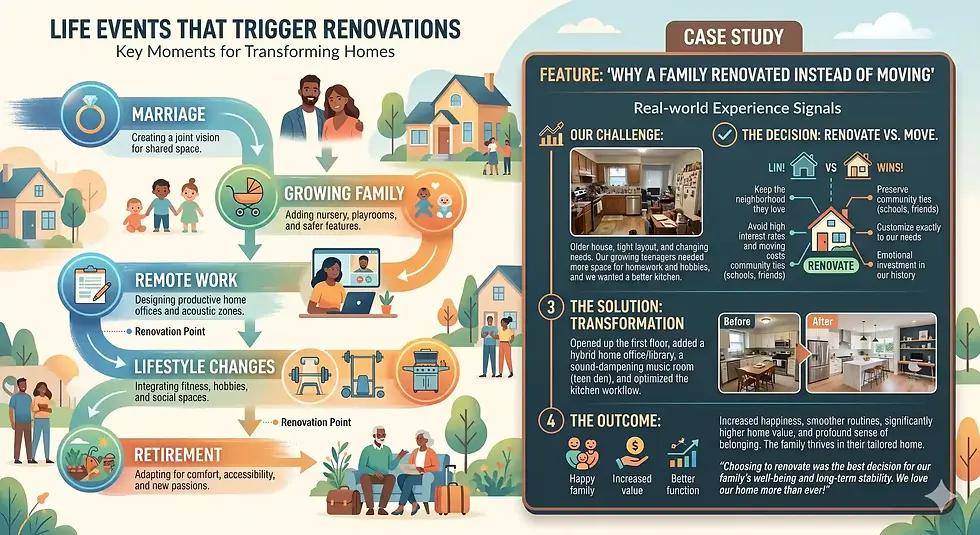
Home renovation is often deeply personal.
People are not simply updating structures. They are shaping environments that reflect their values, goals, and lifestyles.
A growing family may renovate to create more space. Empty nesters may redesign rooms for new hobbies or interests. Others may renovate to preserve a beloved older home while adapting it to modern needs.
These projects frequently represent important life transitions.
As a result, homeowners often develop a strong emotional connection to the renovation process and the spaces they create.
Renovating for Long-Term Happiness

Design trends come and go. Personal needs tend to last much longer.
The most successful renovation projects focus on how people actually live rather than chasing short-term design trends.
Before beginning a renovation, homeowners should consider questions such as:
What areas of the home create daily frustration?
How does the family use each space?
What improvements would support future needs?
How can the design remain functional over time?
When renovation decisions align with lifestyle goals, the results are often more satisfying and enduring.
Looking Ahead: The Future of Human-Centered Home Design

The future of home renovation is increasingly focused on wellness, flexibility, and personalization.
Designers and remodeling professionals are placing greater emphasis on creating environments that support mental health, physical well-being, and changing family needs.
Features such as natural materials, flexible living spaces, improved indoor air quality, and smart home technology are becoming more common.
These trends reflect a growing understanding that homes are not merely places to live. They are environments that influence how people experience everyday life.
Conclusion
Home renovation is about far more than updating finishes or increasing property value.
The spaces we live in shape our routines, influence our moods, affect our productivity, and contribute to our overall well-being.
Thoughtful renovations can create brighter, healthier, and more functional environments that support the needs of modern families. Whether it involves a kitchen transformation, a bathroom upgrade, a finished basement, or a whole-house renovation, the goal is often the same: creating a home that better aligns with the way people want to live.
Working with experienced professionals is an important part of achieving that vision. Burrini and Sons Contracting understands that successful renovation projects go beyond construction alone. By helping homeowners create spaces that are both beautiful and functional, Burrini and Sons Contracting plays an important role in transforming houses into environments that enhance comfort, support daily life, and contribute to long-term satisfaction.


Comments