


What Homeowners Often Overlook When Budgeting for a Major Renovation
A major home renovation is an exciting opportunity to improve the way you live. Whether you're remodeling a kitchen, updating a bathroom, finishing a basement, or planning a whole-house renovation, the goal is often the same: create a more functional, comfortable, and valuable home.
Yet one of the most common challenges homeowners face is budgeting accurately.
Many renovation projects begin with a carefully planned budget, only to encounter unexpected expenses along the way. While most people account for contractor fees and material costs, there are often additional factors that have a significant impact on the final investment.
Understanding these overlooked expenses can help homeowners make informed decisions, reduce stress, and avoid unpleasant financial surprises during the renovation process.
Why Renovation Budgets Frequently Miss the Mark

Creating a renovation budget may seem straightforward at first. Homeowners often gather estimates, choose materials, and establish a spending limit.
However, renovation projects involve many moving parts, and even the most detailed plans can change once work begins.
The Difference Between Estimated and Actual Costs
A renovation estimate provides a valuable starting point, but it is not always the final number.
Material prices can fluctuate. Product availability can change. Additional repairs may become necessary once walls, flooring, or fixtures are removed.
As a result, the actual cost of a renovation may differ from the original estimate.
Older Homes Often Reveal Hidden Issues
One of the biggest reasons budgets change is that existing conditions are not always visible.
During renovation projects, contractors may uncover:
Water damage
Outdated electrical systems
Plumbing issues
Structural concerns
Mold or moisture problems
These discoveries are common, especially in older homes, and often require immediate attention before the planned work can continue.
The Planning Gap
Many homeowners focus primarily on the visible aspects of a renovation, such as cabinetry, flooring, paint colors, or fixtures.
What is often overlooked are the supporting costs that make those upgrades possible. Permits, design work, demolition, cleanup, and contingency planning all play an important role in the overall budget.
The Hidden Costs That Can Significantly Impact Renovation Budgets

Some renovation expenses are easy to anticipate. Others are less obvious but equally important.
Permits and Inspections
Depending on the scope of the project, permits and inspections may be required by local authorities.
These costs can vary based on the type of renovation and location, but they should be considered early in the planning process.
Permits help ensure that renovations meet safety standards and building codes, protecting both homeowners and future property value.
Design and Planning Services
Many successful renovations begin long before construction starts.
Architects, interior designers, engineers, and consultants may be involved in developing plans and ensuring the project meets both functional and aesthetic goals.
While these services add upfront costs, they can often help prevent costly mistakes later.
Demolition and Disposal
Removing old materials is another expense that homeowners sometimes underestimate.
Demolition may involve:
Flooring removal
Cabinet disposal
Wall removal
Waste hauling
Dumpster rental fees
The larger the renovation, the more significant these costs can become.
Utility Adjustments
Major renovations often require modifications to plumbing, electrical systems, or HVAC components.
These updates may not be visible once the project is complete, but they are often essential for ensuring that the renovated space functions properly and safely.
Why Contingency Funds Are Essential for Major Renovations
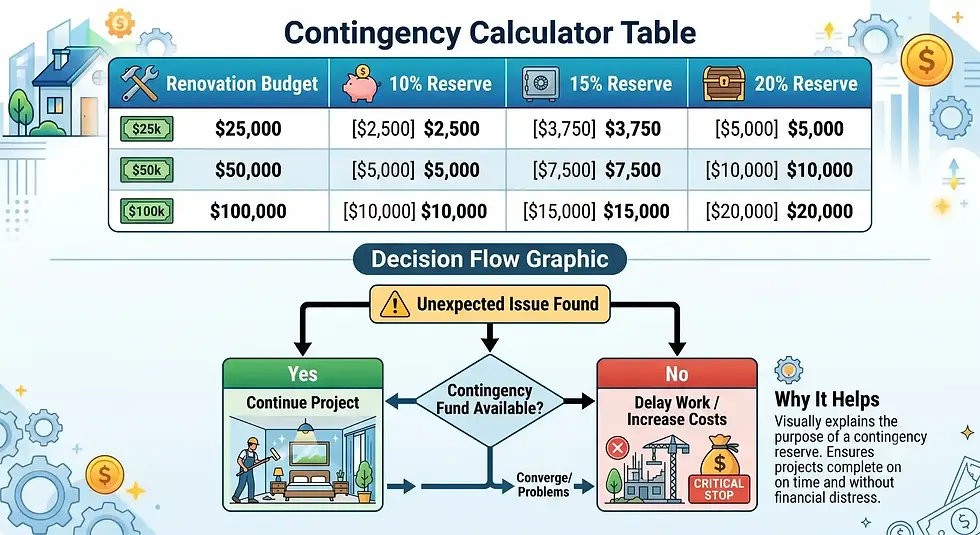
One of the most valuable budgeting tools is a contingency fund.
A contingency fund is money set aside specifically for unexpected expenses.
Renovations Rarely Go Exactly as Planned
Even with careful planning, surprises can happen.
A contractor may discover water damage behind a wall. Electrical systems may need upgrades. Structural repairs may become necessary.
Without a contingency fund, these issues can place significant strain on a renovation budget.
How Much Should Homeowners Set Aside?
Many renovation professionals recommend reserving approximately 10% to 20% of the project budget for unforeseen costs.
For example:
$50,000 renovation = $5,000–$10,000 contingency
$100,000 renovation = $10,000–$20,000 contingency
While homeowners hope they never need to use these funds, having them available provides valuable peace of mind.
The Lifestyle Costs Many Homeowners Fail to Consider

Renovation budgets often focus on construction expenses while overlooking the impact on daily life.
Living Through Construction
Depending on the project, homeowners may experience:
Noise
Dust
Limited room access
Schedule disruptions
These inconveniences can affect routines, productivity, and overall comfort.
Temporary Housing Expenses
In some cases, homeowners choose to stay elsewhere during major renovations.
Potential costs include:
Hotels
Short-term rentals
Extended stays with family
Additional transportation expenses
These costs can add up quickly if they are not included in the original budget.
Increased Dining and Convenience Costs
Kitchen renovations are a good example.
Without access to a functional kitchen, many families rely more heavily on takeout meals, restaurants, or prepared foods.
Similarly, temporary storage units or laundry services may become necessary during larger renovation projects.
Why Material Choices Affect More Than the Initial Budget

Selecting materials involves more than comparing price tags.
Upfront Cost Versus Long-Term Value
A lower-cost product may seem attractive initially, but it may require more maintenance or replacement over time.
Higher-quality materials often provide:
Better durability
Longer lifespan
Improved performance
Greater homeowner satisfaction
Evaluating long-term value is often more important than focusing solely on the initial purchase price.
Supply Chain and Availability Considerations
Product availability can influence both cost and project timelines.
Special-order items, imported materials, or custom products may involve longer lead times and additional expenses.
Planning ahead can help reduce these risks.
The Cost of Mid-Project Changes
One of the fastest ways to increase renovation costs is through change orders.
When homeowners alter designs, materials, or layouts after construction has begun, additional labor and materials are often required.
Making key decisions early helps keep projects on schedule and within budget.
The Renovation Costs That Continue After Construction Ends

Many homeowners assume expenses stop once construction is complete.
In reality, there are often additional costs associated with enjoying the finished space.
Post-Renovation Cleaning
Major renovations frequently leave behind dust and debris.
Professional cleaning services may be necessary to prepare the space for daily use and improve indoor comfort.
Furnishing and Decorating
A newly renovated room often inspires additional purchases.
Examples include:
Furniture
Window treatments
Lighting
Decorative accessories
Storage solutions
These expenses can significantly influence the final investment.
Ongoing Maintenance
Every renovation requires long-term care.
Protecting new finishes, maintaining appliances, and preserving upgraded spaces should be considered part of the overall cost of ownership.
Renovation Return on Investment: Looking Beyond Resale Value

Many homeowners evaluate renovations based on resale value.
While resale value matters, it is not the only measure of success.
Daily Enjoyment Has Value
A well-designed renovation can improve quality of life every day.
Benefits may include:
Better functionality
Improved organization
Enhanced comfort
Increased enjoyment of the home
These benefits often provide value that extends far beyond financial returns.
Lifestyle Improvements Matter
A larger kitchen may encourage family gatherings.
A finished basement may create additional living space.
An updated bathroom may improve comfort and convenience.
These lifestyle improvements often become some of the most rewarding outcomes of a renovation.
Renovations That Frequently Deliver Strong Value
Projects that often provide meaningful long-term benefits include:
Basement finishing
Energy-efficiency upgrades
The best investment is often the one that aligns with the homeowner's needs and goals.
Common Budgeting Mistakes That Lead to Renovation Stress

Many renovation challenges can be traced back to budgeting mistakes.
Common examples include:
Budgeting only for contractor estimates
Ignoring contingency planning
Underestimating timelines
Choosing solely based on the lowest price
Forgetting post-project expenses
Making frequent design changes during construction
Avoiding these mistakes can help create a smoother renovation experience and better overall results.
How to Build a More Realistic Renovation Budget

Successful renovations begin with thoughtful planning.
Define Your Priorities
Start by identifying what matters most.
Separate essential improvements from optional upgrades. This helps direct resources toward the areas that will have the greatest impact.
Build Flexibility Into the Budget
Including contingency funds and allowing room for adjustments creates financial stability throughout the project.
Work With Experienced Professionals
Experienced contractors can identify potential challenges early, provide realistic expectations, and help homeowners make informed decisions.
Their expertise often contributes to more accurate budgeting and fewer surprises.
The Future of Renovation Spending

Home renovation activity continues to remain strong as homeowners seek to improve existing properties rather than relocate.
Research from organizations such as the Harvard Joint Center for Housing Studies and Houzz consistently shows that homeowners are investing in renovations that improve comfort, functionality, and long-term property value.
As housing stock ages and homeowner needs evolve, renovation projects are increasingly focused on creating adaptable living spaces that support modern lifestyles.
This trend highlights the importance of strategic planning and thoughtful budgeting.
Conclusion
A major renovation involves much more than selecting finishes and approving contractor estimates. Hidden costs, contingency planning, temporary living expenses, material decisions, and post-project investments all influence the true cost of a renovation.
By understanding these often-overlooked factors, homeowners can create more realistic budgets, reduce financial surprises, and make decisions with greater confidence. The most successful renovation projects are not necessarily the least expensive—they are the ones that balance cost, functionality, long-term value, and homeowner satisfaction.
For those planning a kitchen remodel, bathroom renovation, basement finishing project, home addition, or complete home transformation, working with experienced professionals can make a significant difference. Burrini and Sons Contracting understands the complexities of renovation planning and helps homeowners navigate every stage of the process.
From budgeting and project management to craftsmanship and execution, their expertise supports renovation projects that are thoughtfully planned, professionally completed, and designed to deliver lasting value.


Comments