


The Complete Home Maintenance Checklist: Seasonal Tasks That Help You Avoid Expensive Repairs
When you own a home, it's easy to focus on the projects you can see—a fresh coat of paint, a remodeled kitchen, or new landscaping. But the work that truly protects your investment often happens behind the scenes.
Routine home maintenance may not be the most exciting part of homeownership, but it's one of the smartest. A clogged gutter, a small roof leak, or a neglected HVAC system can quietly turn into repairs that cost thousands of dollars if left unchecked.
We've seen this firsthand. Many homeowners only discover problems after they become emergencies, whether it's water damage from a leaking roof, mold caused by hidden moisture, or structural issues that could have been prevented with regular inspections.
The good news? Most of these expensive repairs are avoidable.
By following a simple maintenance schedule throughout the year, you can extend the life of your home's major systems, improve energy efficiency, maintain your property's value, and enjoy greater peace of mind.
In this guide, we'll walk you through a complete home maintenance checklist organized by monthly, seasonal, and annual tasks. We'll also cover common warning signs to watch for, explain when you can tackle a project yourself, and help you decide when it's time to call a professional.
Whether you've just purchased your first home or have owned one for years, this checklist will help you stay ahead of problems before they become costly surprises.
What Is Home Maintenance?

Home maintenance is the routine care, inspection, and repair of your home's systems, structure, and exterior to keep everything working safely and efficiently.
Think of it as preventive healthcare—but for your house.
Just as regular medical checkups can catch health issues before they become serious, routine maintenance helps identify small problems before they grow into expensive repairs.
Instead of waiting for something to fail, you're proactively protecting your investment.
Home maintenance generally falls into three categories.
Preventive Maintenance
Preventive maintenance involves regularly inspecting and servicing different parts of your home to reduce wear and tear.
Examples include:
Changing HVAC filters
Cleaning gutters
Inspecting your roof
Servicing your heating and cooling system
Testing smoke detectors
Flushing your water heater
These tasks are relatively inexpensive but can significantly extend the lifespan of your home's major systems.
Corrective Maintenance
Corrective maintenance addresses problems after they're discovered but before they become emergencies.
Examples include:
Repairing a small roof leak
Replacing cracked caulking around windows
Fixing loose deck boards
Repairing damaged siding
Replacing worn weatherstripping
Catching these issues early often prevents larger structural damage.
Cosmetic Maintenance
Cosmetic maintenance improves your home's appearance while also protecting building materials.
Examples include:
Repainting exterior trim
Power washing siding
Sealing concrete driveways
Refinishing decks
Touching up exterior finishes
While these projects enhance curb appeal, many also protect your home from moisture, UV damage, and premature deterioration.
Home Maintenance vs. Home Remodeling
Many homeowners confuse maintenance with remodeling, but they serve very different purposes.
Home Maintenance | Home Remodeling |
Prevents damage | Improves appearance or function |
Preserves existing features | Adds or changes features |
Lower cost | Higher investment |
Routine schedule | Project-based |
Extends lifespan | Increases living space or updates design |
For example, cleaning your gutters every fall is maintenance.
Replacing your kitchen cabinets is remodeling.
Both are valuable, but regular maintenance helps delay major renovations and protects the investment you've already made.
Why Regular Home Maintenance Matters

It's tempting to postpone routine maintenance when everything seems to be working fine.
Unfortunately, many home problems develop slowly and silently.
By the time you notice visible damage, the repair may already be expensive.
Here's why staying proactive matters.
It Protects Your Home's Value
Your home is likely one of your biggest financial investments.
Keeping it well maintained helps preserve its value while making it more attractive to future buyers.
Buyers often notice signs of neglect during inspections, and deferred maintenance can lead to lower offers or requests for costly repairs before closing.
It Helps Prevent Expensive Repairs
Small issues rarely stay small.
A minor plumbing leak can eventually damage flooring, insulation, drywall, and framing.
Loose shingles can allow water into your attic.
Ignoring clogged gutters can cause foundation problems.
Spending a little time each season can help you avoid spending thousands later.
It Improves Energy Efficiency
A well-maintained home costs less to operate.
Simple tasks like replacing HVAC filters, sealing air leaks, and servicing heating and cooling equipment help improve efficiency while reducing monthly utility bills.
Even cleaning refrigerator coils and maintaining attic insulation can make a noticeable difference.
It Extends the Life of Your Home's Systems
Your roof, HVAC system, plumbing, appliances, and water heater all have expected lifespans.
Routine maintenance helps them reach—or even exceed—those expectations.
Skipping maintenance often shortens their service life and increases replacement costs.
It Creates a Healthier Living Environment
Home maintenance isn't just about protecting the building.
It's also about protecting the people living inside it.
Regular inspections help reduce risks associated with:
Mold growth
Poor indoor air quality
Pest infestations
Electrical hazards
Carbon monoxide exposure
A healthier home contributes to better comfort year-round.
It Reduces Stress
Homeownership comes with enough unexpected expenses.
Routine maintenance gives you greater confidence that your home is ready for changing seasons and severe weather.
Instead of reacting to emergencies, you're staying one step ahead.
Your Home Maintenance Schedule at a Glance
One of the easiest ways to stay organized is to divide maintenance tasks by how often they should be completed.
Here's a simple schedule you can follow throughout the year.
Frequency | Recommended Tasks |
Monthly | Replace HVAC filters (as needed), test smoke and carbon monoxide detectors, inspect plumbing for leaks, clean kitchen exhaust fan, check appliances, inspect electrical outlets, monitor humidity levels. |
Quarterly | Inspect gutters, check caulking around windows and doors, inspect exterior drainage, clean refrigerator coils, inspect foundation for new cracks. |
Every 6 Months | Flush the water heater, inspect attic ventilation, service sump pump, inspect dryer vent, clean bathroom exhaust fans. |
Annually | Professional HVAC service, roof inspection, chimney inspection, exterior power washing, deck inspection, foundation inspection, tree evaluation, garage door maintenance. |
Creating calendar reminders or using a home maintenance app can make it easier to stay on track throughout the year.
Monthly Home Maintenance Checklist

Monthly inspections don't take long, but they can help you catch problems before they become expensive.
Here are the tasks we recommend making part of your regular routine.
Replace or Inspect Your HVAC Filter
Your HVAC system works hard throughout the year.
A dirty filter restricts airflow, forces the system to work harder, and reduces indoor air quality.
Most homeowners should inspect their filter every month and replace it according to the manufacturer's recommendations, especially during periods of heavy use.
Benefits include:
Better airflow
Improved energy efficiency
Cleaner indoor air
Reduced wear on your HVAC system
Test Smoke and Carbon Monoxide Detectors
Smoke alarms and carbon monoxide detectors are some of the most important safety devices in your home.
Each month:
Test every detector.
Replace batteries if needed.
Check expiration dates.
Ensure detectors aren't blocked by dust or paint.
These simple checks take only a few minutes but provide valuable peace of mind.
Inspect Plumbing for Leaks
Walk through your home and inspect areas around:
Kitchen sinks
Bathroom sinks
Toilets
Washing machines
Dishwashers
Water heater
Look for:
Water stains
Dripping pipes
Soft flooring
Musty odors
Mold growth
Finding a leak early is far less expensive than repairing water damage later.
Check Electrical Outlets and Switches
Electrical issues often show warning signs before they become dangerous.
Watch for:
Loose outlets
Warm switch plates
Flickering lights
Burn marks
Buzzing sounds
If you notice any of these, it's best to contact a licensed electrician rather than attempting repairs yourself.
Clean Kitchen Exhaust Fans
Cooking grease builds up faster than many homeowners realize.
Cleaning your kitchen exhaust fan helps:
Improve ventilation
Reduce odors
Lower fire risks
Keep your kitchen cleaner
A simple monthly wipe-down can prevent heavy grease accumulation.
Inspect Major Appliances
Take a few minutes to inspect:
Refrigerator
Dishwasher
Washing machine
Clothes dryer
Oven
Water heater
Check for:
Leaks
Unusual noises
Rust
Loose hoses
Poor performance
Routine inspections help extend appliance life while reducing the likelihood of unexpected breakdowns.
Monitor Indoor Humidity Levels
Excess moisture creates the perfect environment for mold, mildew, and wood damage.
Aim to keep indoor humidity between 30% and 50% throughout most of the year.
If humidity stays high, consider using a dehumidifier and improving ventilation in moisture-prone areas like bathrooms, basements, and laundry rooms.
Seasonal Home Maintenance Checklist

Every season brings different challenges for your home. From heavy spring rain and summer heat to falling leaves and freezing winter temperatures, your home's exterior and major systems are constantly exposed to the elements.
That's why we recommend breaking your maintenance routine into seasonal checklists.
Instead of trying to tackle everything at once, you can focus on the tasks that matter most for the time of year.
Over the years, we've found that homeowners who stay on top of seasonal maintenance are far less likely to face emergency repairs. A few hours of preventative work each season can save thousands of dollars in unexpected expenses.
Let's walk through what you should check throughout the year.
Spring Home Maintenance Checklist
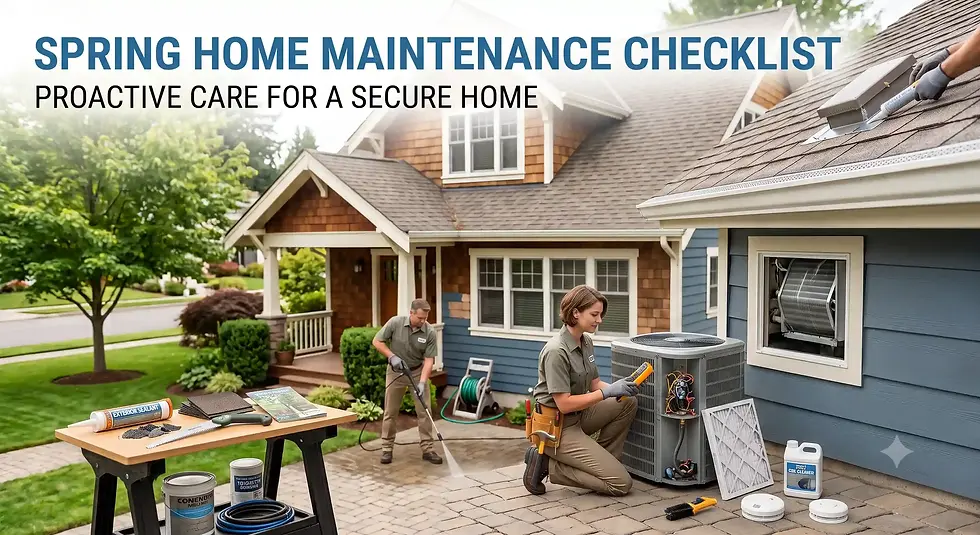
Spring is the perfect time to inspect your home after months of cold weather, snow, ice, and heavy winds. Winter can take a toll on roofing, siding, gutters, foundations, and landscaping, making spring the ideal season to identify and repair any damage before summer arrives.
Inspect Your Roof for Winter Damage
Your roof is your home's first line of defense against the elements, so it deserves a close inspection after winter.
Look for signs such as:
Missing or damaged shingles
Loose flashing around chimneys and vents
Sagging roof sections
Moss or algae growth
Granules collecting in gutters
Water stains in the attic
Even a small roofing issue can allow water to enter your home and cause costly structural damage over time.
If you notice anything concerning—or if your roof is difficult to inspect safely—schedule a professional roof inspection.
Clean Gutters and Downspouts
Your gutters work hard to direct rainwater away from your home.
During winter, they often collect:
Leaves
Twigs
Ice debris
Roofing granules
When gutters become clogged, water can overflow and damage:
Roofing materials
Fascia boards
Siding
Landscaping
Foundations
Basements
Make sure downspouts discharge water several feet away from your home's foundation to prevent drainage issues.
Pro Tip: Installing gutter guards can reduce debris buildup, but they don't eliminate the need for regular inspections.
Examine Your Foundation
Small foundation issues can become expensive structural problems if ignored.
Walk around your home's exterior and inspect for:
New cracks
Shifting soil
Standing water
Uneven concrete
Gaps around windows and doors
Inside your home, pay attention to:
Sticking doors
Uneven floors
Cracks above doorways
Basement moisture
Early intervention is almost always less expensive than major foundation repairs.
Check Windows and Doors
Winter weather can wear down weatherstripping and caulking, allowing drafts and moisture to enter your home.
Inspect for:
Cracked caulk
Damaged weatherstripping
Air leaks
Moisture around frames
Difficulty opening or closing windows
Replacing worn seals is one of the easiest ways to improve energy efficiency.
Schedule HVAC Maintenance
Before summer temperatures arrive, have your air conditioning system professionally inspected.
A spring HVAC tune-up typically includes:
Cleaning condenser coils
Inspecting refrigerant levels
Checking electrical components
Testing airflow
Cleaning drain lines
Inspecting blower motors
Regular maintenance helps your system run more efficiently and may reduce the risk of breakdowns during peak summer heat.
Power Wash Exterior Surfaces
Winter leaves behind dirt, mildew, algae, and road salt on many exterior surfaces.
Spring is an excellent time to clean:
Siding
Walkways
Driveways
Patios
Decks
Fences
A professional power washing not only improves curb appeal but also removes contaminants that can shorten the lifespan of building materials.
Avoid using excessive pressure on delicate surfaces, as improper cleaning can cause damage.
Inspect Decks, Patios, and Railings
Outdoor living spaces experience constant exposure to changing weather.
Inspect for:
Loose boards
Rotting wood
Rusted fasteners
Wobbly railings
Cracked concrete
Failing stain or sealant
Addressing these issues early keeps your outdoor spaces safe and extends their lifespan.
Trim Trees and Shrubs
Spring is a great time to remove dead or damaged branches.
Trim limbs that:
Touch your roof
Hang over power lines
Block gutters
Rub against siding
Threaten windows
Proper pruning also promotes healthier tree growth throughout the year.
Summer Home Maintenance Checklist

Summer provides ideal weather for exterior improvements and preventive inspections.
Longer days make it easier to tackle projects that protect your home before fall and winter arrive.
Inspect Your Siding
Walk around your home and look for:
Cracks
Warping
Loose panels
Fading
Mold growth
Insect damage
Small siding repairs can prevent moisture from reaching the wall structure beneath.
Check Irrigation Systems
If your home has sprinklers or irrigation systems:
Test each zone
Look for broken heads
Repair leaks
Adjust spray patterns
Prevent overspray against the foundation
Efficient irrigation protects your landscaping while reducing water waste.
Touch Up Exterior Paint
Peeling paint isn't just cosmetic.
Paint protects wood and other building materials from moisture and UV exposure.
Touch up areas showing:
Chipping
Bubbling
Peeling
Cracking
Addressing minor paint damage early can delay a full repaint for years.
Inspect Outdoor Lighting
Check every exterior light fixture.
Replace:
Burned-out bulbs
Damaged fixtures
Loose wiring
Broken motion sensors
Well-maintained lighting improves both safety and security.
Clean Dryer Vents
Many homeowners remember to clean the lint trap but forget about the dryer vent itself.
Lint buildup reduces efficiency and increases fire risk.
Inspect:
Exterior vent flap
Vent hose
Airflow
If airflow seems weak, schedule a professional dryer vent cleaning.
Inspect Your Attic
Your attic tells you a lot about your home's condition.
Look for:
Water stains
Mold
Pest activity
Poor ventilation
Damaged insulation
A properly ventilated attic helps regulate indoor temperatures while reducing moisture buildup.
Watch for Pest Activity
Warm weather often brings unwanted visitors.
Look for signs of:
Ants
Carpenter ants
Wasps
Rodents
Bees
Termites
Inspect:
Foundation
Crawl spaces
Window frames
Exterior walls
Attic
Early pest control is usually far less expensive than repairing structural damage later.
Fall Home Maintenance Checklist

Fall is all about preparing your home for colder temperatures.
Completing these tasks before winter helps reduce the risk of weather-related damage.
Service Your Heating System
Before turning on your furnace for the season, schedule a professional inspection.
Routine maintenance includes:
Cleaning burners
Inspecting heat exchangers
Checking gas connections
Testing safety controls
Replacing filters
A well-maintained heating system operates more safely and efficiently.
Clean Your Chimney
If your home has a fireplace, schedule an annual chimney inspection and cleaning.
Creosote buildup increases fire risk and may reduce proper ventilation.
Only use certified chimney professionals for inspections and cleaning.
Seal Air Leaks
Inspect around:
Windows
Doors
Utility penetrations
Attic access points
Adding fresh caulk or weatherstripping helps:
Lower heating costs
Reduce drafts
Improve comfort
Winterize Outdoor Plumbing
Before freezing temperatures arrive:
Disconnect garden hoses
Drain outdoor faucets
Shut off exterior water supplies
Blow out irrigation systems if needed
Frozen pipes are one of the most common causes of expensive winter water damage.
Clean Gutters Again
Falling leaves quickly clog gutters during autumn.
Clean them after most leaves have dropped.
Don't forget to inspect:
Downspouts
Gutter fasteners
Splash blocks
Proper drainage is especially important before winter snow and ice arrive.
Inspect Your Roof Before Winter
Fall is your last opportunity to identify roofing problems before freezing weather makes repairs more difficult.
Pay close attention to:
Missing shingles
Loose flashing
Damaged vents
Soft spots
Moss growth
Repairing minor issues now can help prevent winter leaks.
Inspect Trees Near Your Home
Heavy snow and ice place additional weight on tree limbs.
Remove:
Dead branches
Diseased limbs
Branches hanging over your roof
Trees leaning toward the home
Professional tree trimming reduces storm-related risks.
Winter Home Maintenance Checklist

Winter maintenance focuses on protecting your home from freezing temperatures, snow accumulation, and moisture.
Even small preventive measures can make a significant difference.
Prevent Frozen Pipes
Keep your plumbing protected by:
Insulating exposed pipes
Keeping cabinet doors open under sinks
Maintaining indoor temperatures
Letting faucets drip during extreme cold when recommended
Frozen pipes can burst and cause extensive water damage.
Watch for Ice Dams
Ice dams occur when melting snow refreezes along roof edges.
Signs include:
Large icicles
Water stains on ceilings
Ice buildup in gutters
Proper attic insulation and ventilation help reduce the risk.
Monitor Your Attic
Check periodically for:
Condensation
Frost
Wet insulation
Mold
Roof leaks
These problems often indicate ventilation or insulation issues.
Test Your Sump Pump
Winter storms can quickly overwhelm drainage systems.
Pour a bucket of water into the sump pit to ensure the pump activates properly.
A functioning sump pump can help protect your basement from flooding.
Inspect Your Basement
Winter is an excellent time to check for:
Foundation cracks
Moisture intrusion
Mold
Water stains
Unusual odors
Even small amounts of water should never be ignored.
Keep Emergency Supplies Ready
Prepare for severe weather by keeping:
Flashlights
Batteries
Bottled water
First aid kit
Portable phone chargers
Snow removal tools
Ice melt
Generator (if applicable)
Planning ahead makes winter emergencies much easier to manage.
Seasonal Maintenance Pays Off
Keeping up with seasonal maintenance isn't about adding more work to your schedule—it's about preventing costly surprises before they happen. By dedicating a little time each season to inspecting, cleaning, and maintaining your home, you'll protect its value, improve energy efficiency, and reduce the likelihood of unexpected repairs.
More importantly, you'll gain peace of mind knowing your home is prepared for whatever the next season brings.
Annual Home Maintenance Tasks

While monthly and seasonal maintenance help keep your home running smoothly, some tasks only need attention once a year. These annual inspections are often the difference between catching a small issue early and dealing with a major repair later.
If you're unsure where to start, schedule these projects around the same time each year.
Many homeowners prefer spring or fall because the weather makes inspections easier.
Schedule a Professional Roof Inspection
Your roof protects everything beneath it, but many roofing problems aren't visible from the ground.
An annual inspection can identify:
Loose or damaged shingles
Worn flashing
Soft spots
Ventilation issues
Minor leaks before they spread
Professional inspections are especially valuable after severe storms or if your roof is more than 10 years old.
Flush Your Water Heater
Sediment naturally builds up inside your water heater over time.
If left unchecked, it can:
Reduce efficiency
Increase energy costs
Shorten the unit's lifespan
Cause unusual noises
Flushing the tank annually helps remove sediment and allows your water heater to operate more efficiently.
Service Your HVAC System
Your heating and cooling system works almost every day of the year.
Annual professional maintenance typically includes:
Cleaning internal components
Inspecting refrigerant levels
Testing electrical connections
Checking airflow
Inspecting safety controls
Lubricating moving parts
Routine service can improve efficiency, extend equipment life, and reduce the risk of unexpected breakdowns during peak heating or cooling seasons.
Inspect the Chimney and Fireplace
If you use a fireplace, don't skip your yearly chimney inspection.
A certified chimney professional should check for:
Creosote buildup
Blockages
Cracked flue liners
Damaged masonry
Proper ventilation
Even fireplaces used occasionally should be inspected annually.
Check the Foundation
Walk around your home and inspect the foundation for:
New cracks
Water pooling
Soil erosion
Uneven settling
Inside the basement or crawl space, look for:
Moisture
Mold
Bowing walls
Water stains
Addressing these issues early often prevents much more expensive structural repairs.
Inspect Trees Around Your Property
Healthy trees add beauty and shade, but neglected trees can become hazards.
Have mature trees evaluated if you notice:
Dead branches
Large cracks
Leaning trunks
Root damage
Preventive pruning can reduce the risk of storm damage to your home.
Test Your Garage Door
Your garage door is one of the largest moving parts in your home.
Inspect:
Springs
Rollers
Hinges
Safety sensors
Automatic reverse function
Lubricating moving parts and addressing worn components can help prevent unexpected failures.
Home Maintenance Tasks Homeowners Often Forget

Some of the most expensive repairs start in areas homeowners rarely inspect.
These overlooked spaces deserve attention just as much as your roof or HVAC system.
Dryer Vent
A clogged dryer vent doesn't just reduce efficiency—it also increases fire risk.
Clean and inspect it at least once a year.
Bathroom Exhaust Fans
Dust buildup reduces airflow and allows excess moisture to remain inside bathrooms.
Cleaning the fan improves ventilation and helps prevent mold growth.
Attic Ventilation
Poor ventilation can trap heat and moisture, leading to:
Mold
Ice dams
Higher cooling costs
Roof damage
A quick annual inspection helps identify ventilation issues early.
Exterior Caulking
Caulk naturally deteriorates over time.
Inspect around:
Windows
Doors
Utility penetrations
Trim
Replacing damaged caulk helps prevent water intrusion and improves energy efficiency.
Crawl Spaces
If your home has a crawl space, inspect it annually for:
Standing water
Mold
Pest activity
Damaged insulation
Small issues here can affect your entire home.
Sump Pump
Don't wait until heavy rain arrives.
Testing your sump pump once or twice a year helps ensure it's ready when you need it most.
Outdoor Faucets
Inspect hose bibs and outdoor plumbing for leaks after winter.
Even a slow drip can waste water and lead to larger plumbing issues.
Driveways and Walkways
Concrete and asphalt naturally develop small cracks.
Sealing these cracks early helps prevent water infiltration and extends the life of the surface.
Warning Signs You Should Never Ignore

Homes often provide warning signs before major problems develop.
Pay attention if you notice any of the following.
Water Stains
Brown or yellow stains on ceilings or walls usually indicate a leak.
The source may be your roof, plumbing, or HVAC system.
Musty Odors
Persistent musty smells often point to hidden moisture or mold.
Ignoring the odor won't solve the underlying problem.
Cracks in Walls or Foundation
Small cosmetic cracks are common.
However, expanding cracks or stair-step cracks in masonry should be professionally evaluated.
Sagging Floors or Ceilings
These may indicate structural damage or hidden water intrusion.
Schedule an inspection as soon as possible.
Doors and Windows That Suddenly Stick
Seasonal expansion is normal.
But if multiple doors and windows suddenly become difficult to open, foundation movement may be the cause.
High Utility Bills
An unexplained increase in heating or cooling costs could indicate:
HVAC inefficiency
Air leaks
Poor insulation
Damaged ductwork
Pest Activity
Finding termites, carpenter ants, rodents, or other pests early can significantly reduce repair costs.
Watch for:
Droppings
Chewed materials
Mud tubes
Hollow wood
Nesting materials
Mold Growth
Mold should never be ignored.
Even a small patch may indicate a larger moisture problem hidden behind walls or under flooring.
DIY vs. Professional Home Maintenance
Many routine maintenance tasks are safe for homeowners, while others require specialized knowledge, tools, or safety equipment.
Here's a simple comparison.
DIY Tasks | Hire a Professional |
Replace HVAC filters | Roof repairs |
Test smoke detectors | Electrical repairs |
Clean refrigerator coils | HVAC servicing |
Replace weatherstripping | Foundation repairs |
Inspect plumbing for visible leaks | Mold remediation |
Clean kitchen exhaust fan | Chimney inspections |
Seal small cracks with caulk | Major plumbing repairs |
Trim small shrubs | Large tree removal |
Replace faucet aerators | Structural repairs |
Knowing your limits is just as important as completing the maintenance itself.
Attempting dangerous repairs without proper training can lead to injuries and more expensive damage.
How Much Should You Budget for Home Maintenance?
One of the most common questions homeowners ask is:
"How much should I set aside each year?"
A widely accepted guideline is to budget between 1% and 4% of your home's value annually, depending on factors such as:
Home age
Climate
Construction materials
Previous maintenance history
For example:
Home Value | Estimated Annual Maintenance Budget |
$300,000 | $3,000–$12,000 |
$500,000 | $5,000–$20,000 |
$750,000 | $7,500–$30,000 |
Newer homes may require less maintenance initially, while older properties often benefit from a larger reserve for repairs and upgrades.
Rather than viewing maintenance as an expense, think of it as an investment in protecting your home's long-term value.
Expert Tips to Keep Your Home in Great Shape

After years of working with homeowners, we've found that a few simple habits make a big difference.
Stay Consistent
Don't wait until something breaks.
Routine inspections are almost always less expensive than emergency repairs.
Keep Maintenance Records
Maintain a folder containing:
Service receipts
Inspection reports
Appliance warranties
Roof documentation
HVAC maintenance records
These records are valuable for future maintenance and can even benefit you if you decide to sell your home.
Address Small Problems Quickly
Loose shingles.
Tiny leaks.
Hairline cracks.
These may seem insignificant today, but they're often the beginning of much larger repairs.
Protect Your Home From Water
Water is one of the biggest threats to any home.
Maintain:
Downspouts
Grading around the foundation
Plumbing systems
Keeping water away from your home is one of the most effective ways to prevent structural damage.
Schedule Professional Inspections
Even if you're comfortable handling routine maintenance yourself, periodic professional inspections can identify issues that aren't visible to the untrained eye.
A yearly inspection often costs far less than repairing hidden damage after it worsens.
Frequently Asked Questions
How often should I perform home maintenance?
Some tasks, such as checking HVAC filters and testing smoke detectors, should be completed monthly. Seasonal inspections help prepare your home for changing weather, while larger projects like roof inspections and HVAC servicing are typically performed once a year.
What should be included in a home maintenance checklist?
A complete checklist should cover your roof, gutters, foundation, plumbing, HVAC system, electrical components, windows, doors, appliances, attic, basement, exterior surfaces, and landscaping.
Which home maintenance tasks save the most money?
Maintaining your roof, cleaning gutters, servicing your HVAC system, fixing plumbing leaks promptly, and managing drainage around your foundation are among the most cost-effective preventive measures.
Is professional home maintenance worth the cost?
Yes. Professional inspections can identify hidden issues before they become expensive repairs. They also provide peace of mind, especially for complex systems like roofing, electrical work, HVAC, and structural components.
How often should gutters be cleaned?
Most homes benefit from gutter cleaning at least twice a year—in the spring and fall.
Homes surrounded by mature trees may require more frequent cleaning.
What maintenance should be done before winter?
Before winter, inspect your roof, clean gutters, service your heating system, seal air leaks, disconnect garden hoses, winterize outdoor plumbing, and trim tree branches that could be damaged by snow or ice.
Does regular maintenance increase home value?
While maintenance alone doesn't usually increase a home's market value like a renovation might, it helps preserve value, prevents deferred maintenance issues, and makes your property more appealing to prospective buyers.
Protect Your Home With Consistent Maintenance
Owning a home comes with ongoing responsibilities, but staying ahead of maintenance doesn't have to be overwhelming. Breaking tasks into monthly, seasonal, and annual checklists makes the process manageable while helping you avoid many of the costly repairs that catch homeowners off guard.
The key is consistency. Replacing an HVAC filter, cleaning your gutters, inspecting your roof, or sealing a small crack may seem like minor jobs today, but these preventive steps can save you significant time, money, and stress in the future.
At Burrini and Sons Contracting, we've worked with homeowners who wanted to protect and improve one of their biggest investments. From home repairs and remodeling to exterior maintenance and professional inspections, we understand that every project starts with a well-maintained home.
If you've noticed signs of wear, deferred maintenance, or simply want experienced professionals to evaluate your property, our team is here to help. We'll provide honest recommendations, quality workmanship, and practical solutions that keep your home safe, efficient, and looking its best for years to come.
Whether you're tackling your seasonal checklist or planning larger improvements, investing in regular home maintenance today is one of the smartest decisions you can make for your home's future.



Comments