


Gutter Guards in Morris County: Are They Worth It, What They Cost, and Which Types Actually Handle Oak Leaves

Every fall, Morris County homeowners have the same conversation.
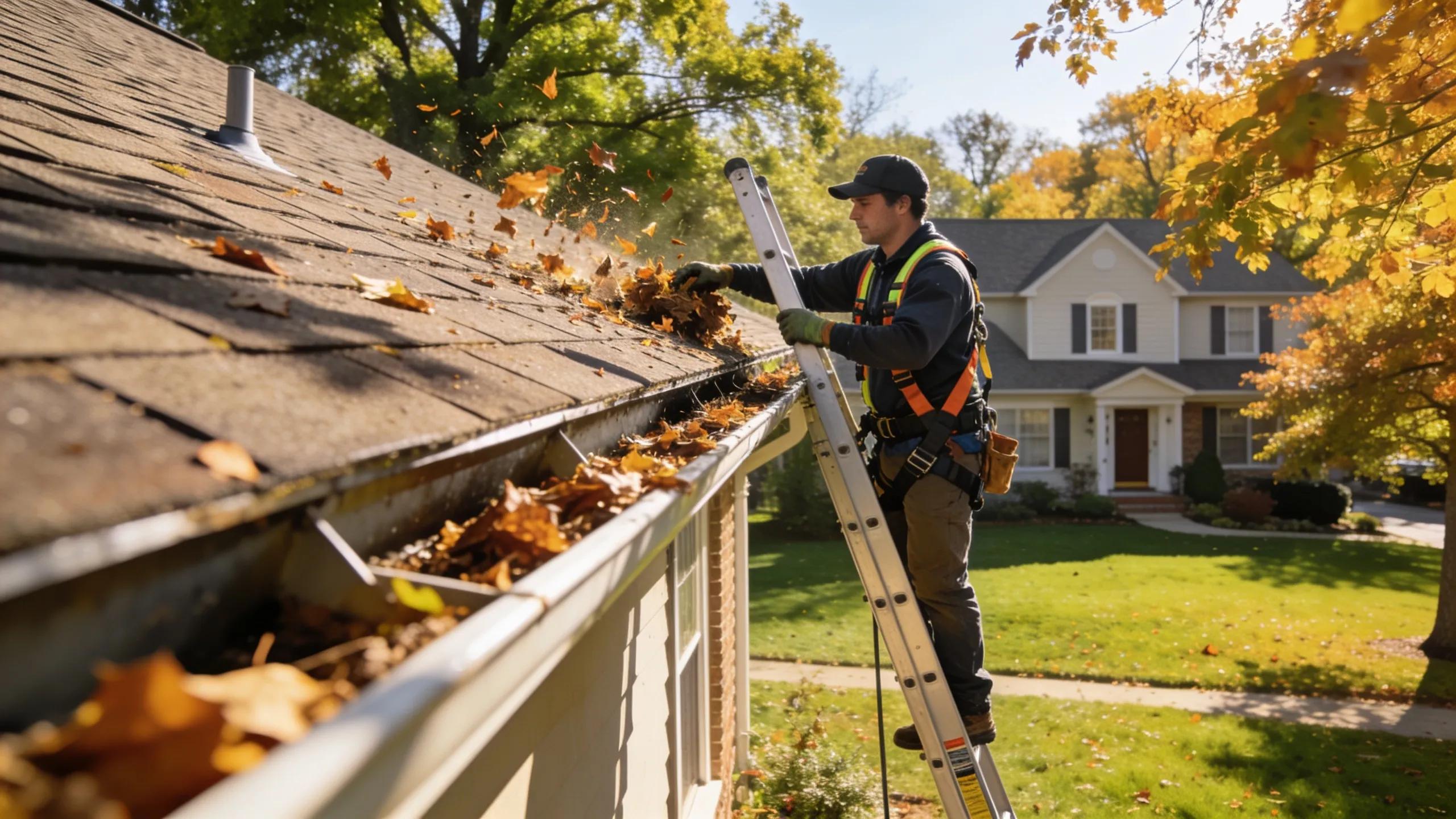
The oaks drop their leaves. The gutters fill up. Someone gets the ladder out, or someone calls us. And somewhere in that process, the question comes up: should we just put gutter guards on and stop doing this?
It is a fair question. Gutter guards can save a lot of ladder time. They can also be oversold.
Some systems handle oak leaves and pine needles well. Others do a decent job with big leaves but let the small stuff through. And none of them make gutters truly maintenance-free, no matter what a sales pitch says.
At Burrini & Sons, we clean a lot of gutters in Randolph, Morristown, Chester, Mendham and the surrounding towns. That gives us a practical view of what guards actually do on real New Jersey houses, under real New Jersey trees.
Here is what gutter guards cost, which types handle oak leaves best, and how to decide whether they are worth it for your home.
What Do Gutter Guards Actually Do?
A gutter guard is a cover, screen, insert or hood installed over or inside your gutter. Its job is simple: let water in, keep debris out.
When it works, you get fewer clogs, less overflow and less water spilling over the edge onto your siding, landscaping and foundation.
That last part matters more than most people realize. In a This Old House survey of 1,000 homeowners, 52% said they installed gutter guards mainly to protect their foundation, not just to reduce cleaning.
Clogged gutters do more than look messy. We covered the bigger risks in our post on the hidden dangers of clogged gutters: overflow at the corners, water sitting against fascia boards, soggy soil along the foundation, and ice buildup at the roof edge in winter.
How Much Do Gutter Guards Cost?
Gutter guards are priced by the linear foot, so the length of your gutters drives the total.
A useful rule of thumb: a 2,000-square-foot home typically has around 200 linear feet of gutter. A 3,000-square-foot home may be closer to 300.
Here is how national pricing breaks down right now:
Gutter Guard Type | Typical Cost | Notes |
Foam inserts | About $6 per linear foot (DIY) | Cheapest, shortest-lived |
Plastic or metal screens | About $7.50 per linear foot (DIY) | Basic protection, 5 to 10 year life |
Brush guards | About $7.70 per linear foot (DIY) | Easy to install, trap debris |
Reverse-curve / hood | About $7.80 per linear foot (DIY) | Low maintenance, 10 to 20 year life |
Stainless micro-mesh | About $7.50 per foot materials; more installed | Best at blocking small debris |
Professionally installed systems | About $16 per linear foot average | Roughly $3,000 to $6,000 for 200 feet |
Those figures come from This Old House's 2025 surveys of gutter guard buyers. Its professional-installation average was about $16 per linear foot, or roughly $3,000 to $6,000 for a 200-foot system.
Your actual quote will depend on:
Total linear feet of gutter
Number of stories and roof pitch
Guard type and brand
Gutter size (6-inch gutters need wider guards)
Condition of the existing gutters and fascia
Number of corners, downspouts and valleys
Whether old guards need to be removed first
One more thing we always check before quoting guards: the gutters themselves. Putting a premium guard on a sagging, leaking or poorly pitched gutter is like putting a new roof on a rotted deck. Fix the gutter first.
Which Gutter Guards Actually Handle Oak Leaves?
This is the question that matters most in Morris County.
Oak leaves are big, they fall late, and they keep falling for weeks. Many properties also have maples, pines and spruces in the mix, which means you are dealing with large leaves, small seeds, helicopters, needles and roof grit all at once.
Here is how the main guard types handle that mix.
Foam Inserts
Foam sits inside the gutter and blocks large leaves. The problem is that small debris, seeds and needles get stuck on top and in the foam itself. Foam can also hold moisture and grow moss.
Our take: fine as a short-term fix, not a long-term answer under oaks and pines.
Brush Guards
Brush guards look like giant pipe cleaners sitting in the gutter. They catch leaves before they reach the bottom of the gutter.
They are easy to install, but leaves and needles get tangled in the bristles. You end up pulling the brushes out to clean them.
Our take: better than nothing, but not ideal for heavy oak coverage.
Screens
Screens snap or screw on top of the gutter. Larger-hole screens keep out big oak leaves but let seeds and needles through. Flimsy plastic screens can also warp or pop loose.
Our take: aluminum screens can work on lighter-tree properties. Under heavy oaks and pines, we would usually look further.
Reverse-Curve (Surface Tension) Guards
These hoods cover the gutter. Water follows the curved edge into the gutter while leaves slide off the roof.
They handle large oak leaves well. The trade-off is that very heavy rain can overshoot the curve, and appearance from the street is more noticeable.
Our take: good for large leaves, but not perfect in downpours or with lots of small debris.
Stainless Steel Micro-Mesh
Micro-mesh uses a very fine stainless screen over a supporting frame. It blocks leaves, needles, seeds and most roof grit while still letting water through.
Leaves can sit on top and dry out, and the mesh surface occasionally needs brushing or rinsing, but debris rarely gets into the gutter itself.
Our take: for most Morris County homes with oaks, maples and pines nearby, properly installed micro-mesh is usually our first recommendation.
Gutter Guards vs. Regular Gutter Cleaning: Which Makes More Sense?
This is where the math gets personal.
Professional gutter cleaning typically runs about $100 to $250 per visit for a single-story home, more for taller or larger houses.
If your property only needs one cleaning a year, guards can take a long time to pay for themselves.
If you have heavy tree cover and need cleaning two or three times every fall, guards start to make a lot more sense, both financially and in terms of not having someone on a ladder repeatedly.
Here is how we usually think about it:
Your Situation | What Usually Makes Sense |
Few trees, one cleaning per year | Regular cleaning |
Moderate trees, two cleanings per year | Either; guards worth pricing |
Heavy oaks or pines, three or more cleanings | Quality micro-mesh guards |
Two- or three-story home, steep roof | Guards worth serious consideration |
Gutters sagging, leaking or poorly pitched | Repair first, then decide |
If you are not sure how often your home really needs cleaning, our Q&A on when to clean your gutters and our tips for gutter cleaning on homes with lots of trees are a good place to start.
Are Gutter Guards Worth It?
For many Morris County homes, yes. But the honest answer comes with three conditions.
First, the guard has to match the trees. A cheap foam or brush system under a stand of oaks and pines will frustrate you quickly.
Second, installation matters as much as the product. A poorly installed guard can direct water behind the gutter and down the fascia, which defeats the purpose.
Third, guards reduce maintenance. They do not eliminate it. Even with guards, gutters should still be inspected and flushed periodically. Some guard installers recommend a cleaning at least every two years, even with covers in place.
If you go in expecting less maintenance instead of no maintenance, gutter guards are usually a good investment.
What to Ask Before You Buy Gutter Guards
Before signing anything, we recommend asking:
What type of guard is this, and how does it handle needles and seeds?
Is it installed under the shingles, on the gutter lip, or on the fascia?
Will it affect my roof warranty?
Are my existing gutters in good enough shape to keep?
How is the system cleaned when debris sits on top?
What does the warranty actually cover?
What is the total price per linear foot, including removal of any old guards?
A good installer will answer these clearly.
Timing: Install Before the Leaves Come Down
In our area, most leaf drop happens from mid-October through November.
If you want guards in place for this season, early fall is the time to decide. Once leaves are already filling the gutters, they need to be cleaned out before any guard can go on.
If guards are not in the budget this year, a thorough fall cleaning is still the most important thing you can do before winter. Our Morris County gutter cleaning service covers clearing gutters and downspouts, checking flow and flagging any problems we see along the way.
It is also a good time to look at the rest of the roof edge. If moss or dark streaks are building up, roof cleaning can be handled at the same time.
Our Recommendation
If your home sits under heavy oaks, maples or pines and you are cleaning gutters more than once a season, a quality stainless micro-mesh system on sound gutters is usually worth it.
If your trees are light and one fall cleaning keeps things flowing, regular professional cleaning may be the smarter spend.
Either way, the goal is the same: keep water moving off the roof and away from the house.
Gutters are one of the simplest systems on a home and one of the easiest to ignore. They are also on our complete home maintenance checklist for a reason.
Talk to Burrini & Sons About Your Gutters
At Burrini & Sons Contracting, we help homeowners throughout Morris County keep their gutters working, whether that means a thorough fall cleaning, a repair, or a conversation about guards that actually fit the trees around your house.
Learn more about our gutter cleaning services, or request a free quote and we will take a look before the leaves come down.
Frequently Asked Questions
How much do gutter guards cost?
Professionally installed gutter guards averaged about $16 per linear foot in This Old House's 2025 survey, or roughly $3,000 to $6,000 for a typical 200-foot system. DIY products range from about $6 to $8 per linear foot for materials.
What are the best gutter guards for oak leaves?
Stainless steel micro-mesh guards usually perform best under oaks because they block large leaves as well as seeds and needles. Reverse-curve hoods also handle large leaves well but can let water overshoot in heavy rain.
Do gutter guards eliminate gutter cleaning?
No. They reduce how often gutters clog, but gutters still need periodic inspection and flushing. Debris can also collect on top of some guards.
Can gutter guards cause problems?
Poorly matched or poorly installed guards can. Some trap debris on top, some let small debris through, and incorrect installation can send water behind the gutter. Installation quality matters as much as the product.
Should I clean my gutters before installing guards?
Yes. Gutters should be fully cleaned and checked for leaks, sagging and pitch before guards are installed.


Comments